January 12, 2026 – Coral reefs are often described as biodiversity hotspots, but new research reveals that they also act as powerful regulators of the microscopic life in the surrounding ocean. A new study led by Dr. Herdís G. R. Steinsdóttir, a postdoctoral researcher working under the guidance of Dr. Miguel J. Frada of the Department of Ecology, Evolution and Behavior at the Hebrew University of Jerusalem and the Interuniversity Institute for Marine Sciences in Eilat, together with Dr. Derya Akkaynak of the University of Haifa and the Interuniversity Institute for Marine Sciences in Eilat, shows that coral reefs impose pronounced daily rhythms on nearby microbial communities-reshaping their composition and abundance over the course of a single day.
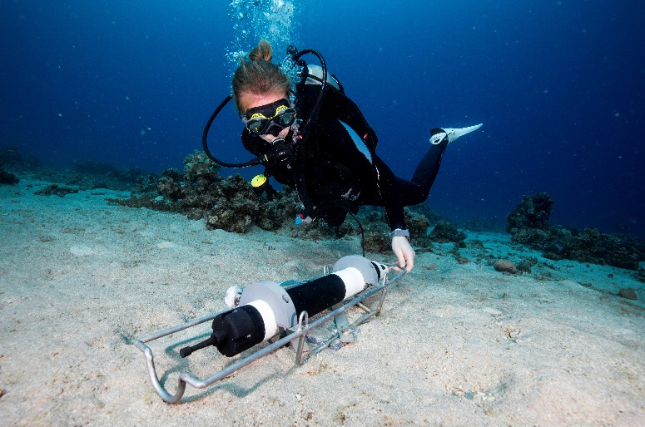
The study, published in Science Advances, tracked microbial populations in waters above a coral reef in the northern Gulf of Aqaba in the Red Sea, comparing them with those in nearby open waters across winter and summer seasons. Using high-frequency sampling every six hours, the researchers uncovered previously undocumented daily and seasonal cycles affecting bacteria, microalgae, and microscopic predators.
“We found that the reef is not just passively surrounded by microbes,” said Dr. Frada. “It actively structures microbial life in time, creating daily patterns that repeat across seasons and influence how energy and nutrients move through the ecosystem.”
The research team discovered that reef waters consistently contained significantly fewer bacteria and microalgae than adjacent open waters, indicating active removal by reef organisms. At the same time, populations of heterotrophic protists-microscopic predators that feed on bacteria-increased sharply at night, sometimes by as much as 80 percent, highlighting predation as a major force shaping microbial dynamics.
One of the most striking findings involved Symbiodiniaceae, the family of dinoflagellates best known as coral symbionts. Genetic signatures of these organisms consistently peaked around midday in reef waters, pointing to daily cycles of release, growth, or turnover that may be linked to light conditions and coral metabolism.
“These daily microbial rhythms were as strong as, and sometimes stronger than, seasonal differences,” said Dr. Steinsdóttir. “This shows that time of day is a critical factor when studying reef-associated microbial communities.”
By combining genetic sequencing, flow cytometry, imaging technologies, and biogeochemical measurements, the interdisciplinary team provides one of the most detailed temporal views to date of microbial life around coral reefs. The findings suggest that microbial daily cycles could serve as sensitive indicators of reef functioning and ecosystem health in a changing ocean.
The research paper titled “Microbial dynamics in coral reef waters: Diel cycles in contrasting seasons” is now available in Science Advances and can be accessed here.
Researchers:
Herdís G. R. Steinsdóttir1,2,3, Derya Akkaynak1,3, Miguel J. Frada2,3
Institutions:
- Hatter Department of Marine Technologies, Leon H. Charney School of Marine Sciences, University of Haifa, Haifa, Israel.
- Department of Ecology, Evolution and Behaviour, The Alexander Silberman Institute of Life Sciences, The Hebrew University of Jerusalem, Jerusalem, Israel.
- The Interuniversity Institute for Marine Sciences in Eilat, Eilat, Israel.