April 20, 2026 – Israeli military conflicts have had significant impacts on population health behaviors, including nutrition, physical activity, smoking, and sleep.
The research was conducted by a team from the “For a Change” Lab at the Federmann School of Public Policy and Governance at the Hebrew University of Jerusalem (HU), led by Dr. Roni Lotan and Prof. Eyal Peer, together with researcher Dana Roll.
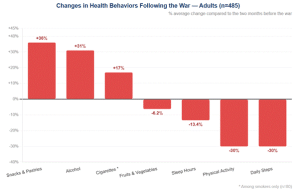
The most significant finding was a sharp decline in physical activity. Nearly two-thirds of respondents reported a decrease in their daily step count, averaging about 30% fewer steps compared to the pre-war period. Similarly, 57% reported reduced engagement in physical activity, including aerobic exercise, strength training, and flexibility workouts. Not surprisingly, nearly two-thirds (60%) of respondents reported reduced sleep duration during the war, with an average decline of 13.4%.
The findings highlight the urgent need for targeted health interventions during emergencies. According to Dr. Lotan, an epidemiologist and clinical dietitian specializing in behavioral health, “it is essential to design environments and solutions that support the maintenance of healthy routines under stress and uncertainty. These may include facilitating access to home-based physical activity, shaping healthier family food environments, and supporting parents in maintaining structured daily routines for their children.”
Also reported was a marked increase in the consumption of ultra-processed foods, such as snacks, sweets, and pastries; products typically high in fat, sugar, and salt. Alcohol consumption also increased, with an average rise of 31%, although only 18.1% of respondents reported drinking more.
Interestingly, no association was found between decreased fruit and vegetable intake and increased consumption of ultra-processed foods. This suggests that the rise in ultra-processed food consumption did not come at the expense of healthier foods but rather reflected an overall increase in food intake. In contrast, reduced sleep was associated with both increased consumption of ultra-processed foods and decreased physical activity. Individuals who slept less during the war experienced greater deterioration in both dietary and physical activity habits.
Greater Exposure, Greater Impact
The frequency of air raid alarms emerged as a significant factor influencing health behaviors. Higher exposure to alarms was associated with greater reductions in sleep and daily step count. Gender differences were also observed: women reported a more pronounced decrease in fruit and vegetable consumption and a greater increase in ultra-processed food intake compared to men.
Impact on Children
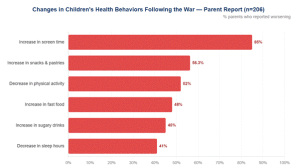
The study further examined the effects on children’s health behaviors. Among participants, 206 were parents of children aged 2–10. The most striking finding was a substantial increase in screen time, reported by 85% of parents.
Dietary habits among children also worsened. Over half of parents (56.6%) reported increased consumption of snacks, sweets, and pastries; 48% reported increased intake of fast food (e.g., frozen schnitzels and hot dogs); and 45% reported higher consumption of sugary drinks. Additionally, 52% of parents reported reduced physical activity among their children, and 41% reported decreased sleep duration.
Importantly, these behavioral changes tended to cluster. Increased screen time was associated with higher consumption of unhealthy fast food, salty snacks, sugary drinks, and reduced physical activity. Similarly, decreased physical activity was linked to reduced sleep. These findings suggest that the war did not affect isolated behaviors but led to a simultaneous deterioration across multiple health domains in children.
Alarm frequency was also associated with children’s behaviors: higher exposure was associated with reduced sleep and increased screen time. Interestingly, having young children appeared to act as a protective factor for parental alcohol consumption—parents of children up to age 10 reported smaller increases in alcohol intake compared to those without young children.
Implications and Future Research
The research team expressed concern about the extent of deterioration in health behaviors among the Israeli public. A follow-up phase is planned, involving a second survey approximately two weeks after the end of the war.
Methodology
The study was based on a survey of 485 participants from the Jewish population in Israel, aged 20–70 (mean age 42.9; 52.8% women), sampled via iPanel. The survey was distributed approximately two weeks after the outbreak of the war, and respondents reported on their health habits during the war compared to the two months preceding it.