February 6, 2026 – A new, real-time biosensor that enables wineries to detect flavor and quality problems even with high alcohol conditions has been developed by researchers at the Hebrew University of Jerusalem (HU).
According to the research reported in Microbial Biotechnology, the biosensor could offer a simpler, lower-cost alternative to lab testing and strengthen quality control across fermentation-based industries, including food production and biofuels, as well as for noninvasive medical diagnoses, such as breath analysis.
Wine spoilage is often caused by the buildup of acetic acid, the compound responsible for vinegar-like smells and sour flavors. Once acetic acid levels rise, the fermentation process can stall, and the wine may become undrinkable. Current methods for measuring acetic acid rely on laboratory techniques such as gas and liquid chromatography, which are expensive, slow, and require liquid samples. These limitations make it difficult for wineries to monitor fermentation in real time and react before damage occurs.
To address this challenge, the researchers developed a living biosensor made from engineered bacteria that emits a measurable luminescent signal, allowing accurate quantification of acetic acid. In laboratory tests, the biosensor showed a strong, linear response to acetic acid levels between 0 and 1 gram per liter. This range is critical for winemakers, as spoilage typically begins when levels reach approximately 0.7 grams per liter (g/L). At these spoilage-relevant concentrations, the signal increased five to eight times, providing a clear warning long before the wine becomes undrinkable.
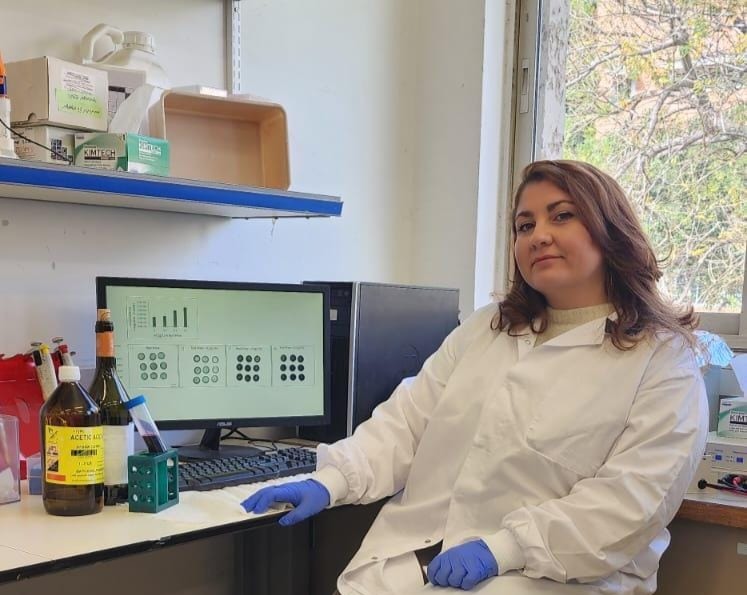
“This system allows us to detect acetic acid in real time, without complicated equipment or sample processing,” said Prof. Yael Helman, of the HU Institute of Environmental Sciences (IES), Department of Plant Pathology and Microbiology, The Robert H. Smith Faculty of Agriculture, Food and Environment. “It opens the door to affordable, on-site monitoring of fermentation quality and, in the future, may even support medical diagnostics based on volatile biomarkers.”
One of the most important breakthroughs is that the sensor works in both liquid and air in the headspace of a wine bottle or a closed fermentation tank. In tests with commercial red and white wines, the biosensor successfully distinguished normal wine from wine that had been artificially spoiled by added acetic acid, producing a clear increase in light output within two hours. Unlike many electronic or optical sensors, the new biosensor remains reliable even in high alcohol environments. It functioned accurately in wines containing up to 14.5% alcohol, a condition that typically interferes with conventional detection systems.
According to the researchers, including Prof. Yael Helman, Ph.D. student Yulia Melnik-Kesler, and in collaboration with Prof. Oded Shoseyov, the technology could have much wider applications. It is also a potential biomarker for certain diseases, suggesting that future versions of the biosensor could potentially be adapted for noninvasive medical diagnostics, such as breath analysis.
The research paper titled “Detection of Spoilage-Associated Acetic Acid Levels Using a Transcription-Based Whole-Cell Biosensor” is now available in Microbial Biotechnology and can be accessed here.
Funding: This work was supported by the Israel Innovation Authority, Kamin grant [# 64948].
Researchers:
Yulia Melnik Kesler1, Igor Kviatkovski1, Neta Rotem1, Alex Brandis2, Oded Shoseyov3, Tali Yarnitzky4, Yael Helman1
Institutions:
- The Institute of Environmental Sciences (IES), Department of Plant Pathology and Microbiology, The Robert H. Smith Faculty of Agriculture, Food and Environment, The Hebrew University of Jerusalem, Rehovot, Israel
- Tevie Mehlman, Life Sciences Core Facilities, Weizmann Institute of Science, Rehovot, Israel
- The Institute of Plant Sciences, The Robert H. Smith Faculty of Agriculture, Food and Environment, The Hebrew University of Jerusalem, Rehovot, Israel
- Scientific Consulting, Modi’in-Macabim-Reut, Israel