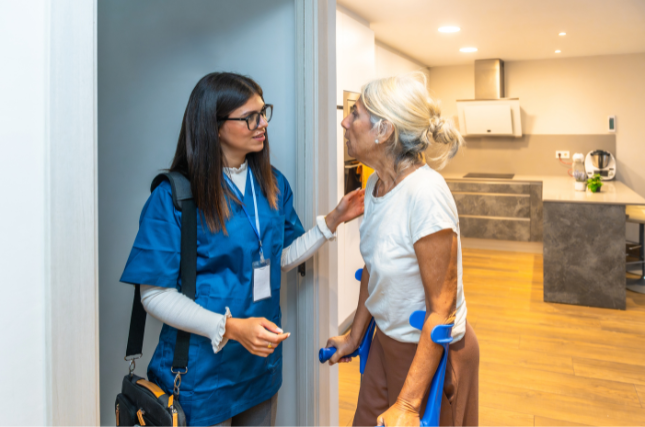
January 20, 2026 – Home visits with older adults help first-year medical students build stronger communication skills, rethink assumptions about aging, and understand patient care beyond the clinic, according to a new study by researchers at the Hebrew University of Jerusalem (HU).
For many medical students, the earliest years of training are heavy on textbooks and light on real patient contact. However, a new study published in Medical Education Online examines an eight-year Service-Learning initiative in which first-year medical students visit adults 60 and older in the community throughout an academic year.
As populations worldwide age, medical education continues to grapple with age-related stereotypes and discomfort around aging. The researchers conclude that relationship-based service learning early in training may help medical students develop stronger empathy, reduce ageist attitudes, and approach patients with a more human, patient-centered mindset.
The study was led by Hebrew University Faculty of Medicine researchers Dr. Tali Sahar, and Prof. Naama Constantini, in collaboration with Dr. Adi Finkelstein of the Jerusalem College of Technology.
In the study, students visited older adults in pairs, conducting about ten visits over the course of the year. Each visit lasted 60 to 90 minutes and focused on gentle, individualized physical activity alongside open conversation – about everyday challenges, health concerns, and what it means to age.
The program included an introductory workshop and ongoing mentoring from volunteer physicians and physiotherapists, and included three consecutive cohorts of medical students. In total, researchers collected data from 60 students through interviews and focus groups and analyzed 128 reflective assignments using reflexive thematic analysis.
Through interviews, focus groups, and reflective writing, the researchers found that the experience shaped students in ways that extended far beyond the visits themselves.
Many students noted that these encounters helped them reflect on what kind of physicians they hope to become and described their experiences as eye-opening:
“When I was able to create a real connection with an older person, I understood that treatment has meaning far beyond providing medicine — it is about seeing the whole person.”
“I learned that sometimes the most important thing is simply to listen. Our mere presence in the room made an impact and gave the patient a sense of value.”
Among their key takeaways were:
- Confronting difficult topics such as vulnerable, mortality, and end-of-life care
- Building trust through attentive listening and consistent presence
- Communicating with sensitivity and respect, especially around autonomy
- Coping with uncertainty and complexity, rather than rushing to “fix” problems
- Understanding health in broader context that includes loneliness, disability, and social support
To conclude, early and sustained engagement with older adults in their home environment through a structured service-learning project enhanced medical students’ professional development, empathy, and attitudes toward aging. Incorporating similar programs into medical education curricula may provide substantial pedagogical benefits. Future research should assess long-term impacts on career choices and care quality.
The research paper titled “Beyond the classroom: a qualitative study of voluntary home visits to older adults as a tool for empathy and professional growth in medical students” is now available in Medical Education Online and can be accessed here.
Researchers:
Adi Finkelsteina, Naama Constantinib, Netanel Gelkopc, Tamar Guttmand, Anya Krichevskyd, Naama Mittelmanc, Gavriel Parker Sahalac, Nir Weigerte, Mici Phillipsd,f, Ohad Avnyd and Tali Sahard,g
Institutions:
- Selma Jelinek School of Nursing, Jerusalem College of Technology, Jerusalem, Israel
- Heidi Rothberg Sports Medicine Center and The Eisenberg R&D Authority, Shaare Zedek Medical Center, The Hebrew University, Jerusalem, Israel
- The Hebrew University, Jerusalem, Israel
- Family Medicine Department, Hebrew University, Jerusalem, Israel
- Hematology Department, Shaare Zedek Medical Center, Jerusalem, Israel
- Faculty of Medicine, The Hebrew University, Jerusalem, Israel
- Kappy and Eric Flanders National Palliative Care Resource Centre, Ben Gurion University, Beer-Sheva, Israel